How does optical vibration analysis with Motion Magnification work?

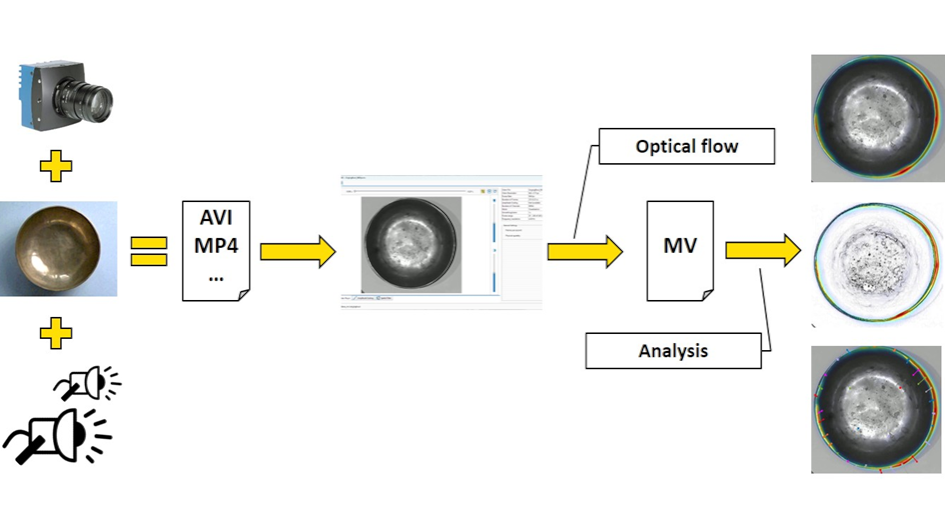
In the field of vibration analysis, optical measurement methods (such as Laser Doppler Vibrometry or Digital Image Correlation) have been established for years and have become indispensable for certain applications. Relatively new, however, is the Motion Magnification technology, which is also utilized in the WaveCam software. This technology allows complex vibration analyses to be performed using just a single high-speed video recorded with a camera or smartphone (see workflow in Fig. 1).

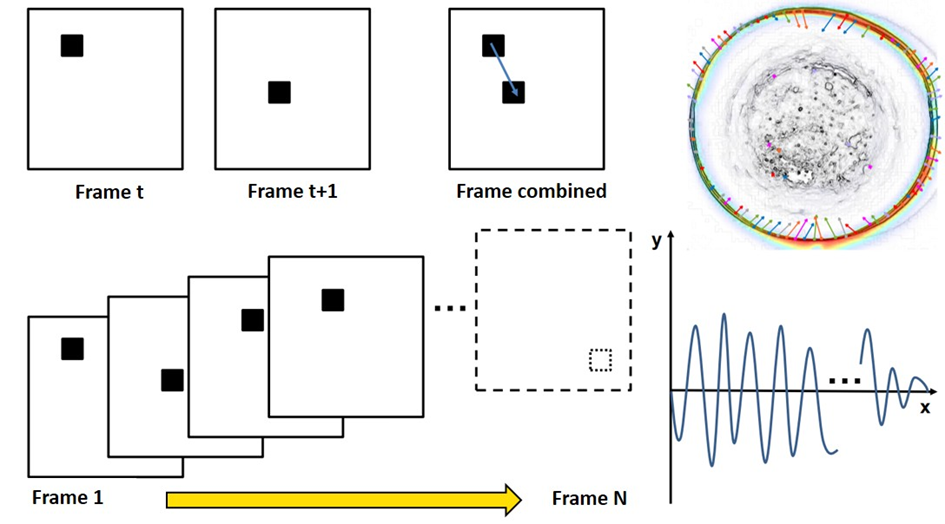
Optical flow describes the apparent motion derived from changing pixel intensities in a video sequence and can be formulated as a time-dependent velocity field of object points projected onto the image plane. This tracking of pixel movement provides a simple, non-contact, and full-field measurement method capable of analyzing hundreds of thousands of points simultaneously (Fig. 2).

By utilizing the time channels of individual pixel areas (acting as optical sensors), comprehensive Operational Deflection Shape (ODS) analyses can be performed in both the frequency and time domains. This even includes transient events — all from a single video. As a result, both individual components and complex multi-body structures can be analyzed with high efficiency.